Most people don’t find their way to my table first.
They try everything else before they get here.
Physio. Massage. Chiropractic care. Rehab programs. Strength work. Rest. Ice. Heat. Dry needling. Scraping. Cupping. Time. More time. And often, a quiet sense of frustration that things should be better by now.
By the time someone reaches out to me, it’s rarely casual. It’s usually because something hasn’t fully resolved, despite doing “all the right things”.
And honestly? I’m good with that.
Because at this point, there’s a quiet resolve. It’s new and it’s pushing you forward.
The long road people take before they arrive
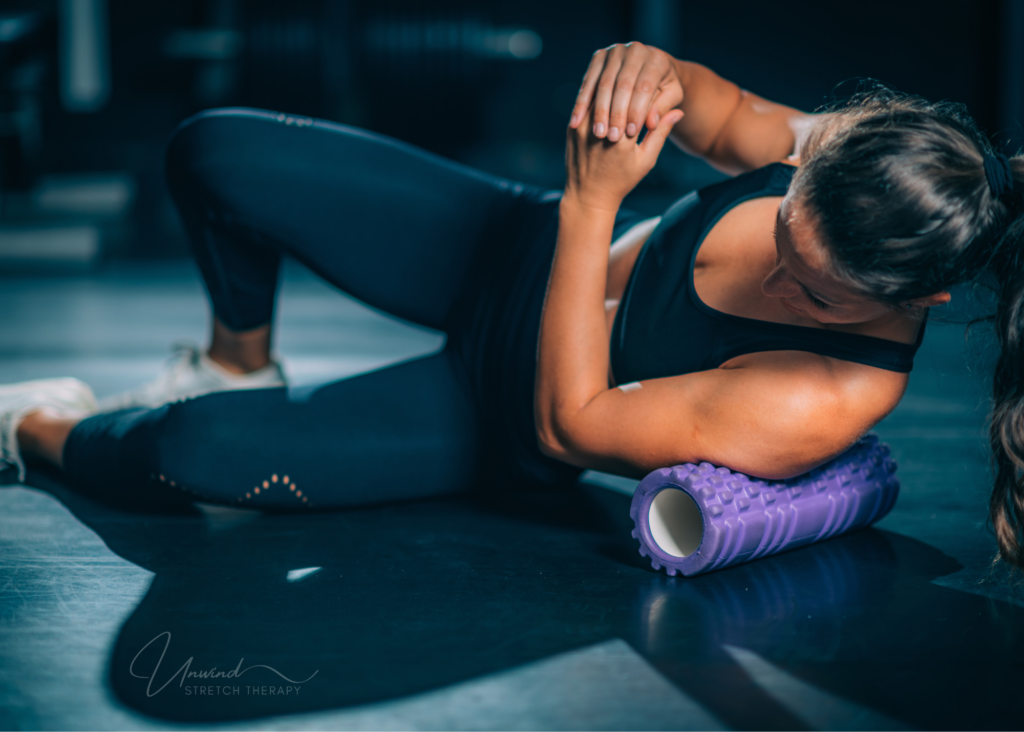
When you’re competitive, especially at a high level, your instinct is to outwork the problem. You stretch harder. You train through it. You layer in more.
Let’s face it, recovery isn’t always exciting. It doesn’t come with adrenaline or measurable PRs.
So, it becomes something you get through, instead of something you integrate.
That’s when the body stays in a loop and progress stalls, with or without an injury.
In athletes, it usually shows up as a performance limitation:
- You can’t access the range of motion your sport demands
- You’re not as explosive or as controlled when it matters
- Rolling, stretching, and your standard warm-up don’t carry over into the game
- Your recovery isn’t keeping up with how hard you’re training
- Performance plateaus, despite all your hard work
- You’re suddenly dealing with more frequent injuries
You’re strong. You’re disciplined. You’re doing everything right. Yet something isn’t connecting when it matters.
Outside of sport, it looks different at first glance.
Sometimes it’s connected to a clear trigger: an injury, an accident, a stressful period that pushed your system too far.
Sometimes it builds slowly, through cumulative strain or prolonged stress, until it quietly becomes your reality.
- Pain that lingers
- Fatigue that doesn’t quite make sense
- A body that no longer feels at ease.
Different stories. Same underlying shift.
And there it is, the other layer.
The nervous system can shift into protection after a single acute event — a crash, a collision, a major injury— or after repeated smaller stressors over time. Training cycles. Micro-injuries. Cumulative strain. Emotional overload.
Sometimes it’s obvious.Sometimes it builds so gradually you barely notice it happening until it’s your new normal.
Yet, the protective response is the same. Your nervous system remains vigilant.
At that point, you’re not looking for another modality.
You’re simply looking for a different conversation with your body.
What I actually do (and why it’s different)
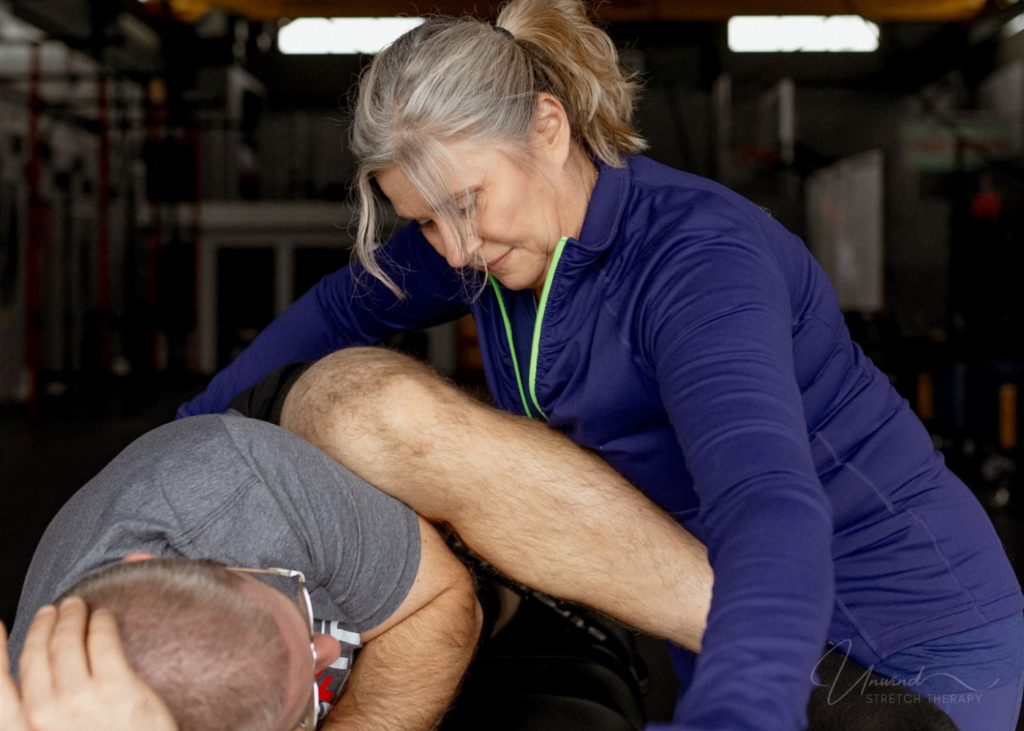
My work focuses on helping the nervous system downshift out of protection while simultaneously restoring tissue quality.
We’re not chasing isolated pain points. We’re rebalancing tension across the system and addressing what’s driving those restrictions and pain patterns in the first place. When tension is rebalanced, the body naturally returns to more efficient positioning — and that’s where real change begins.
That distinction matters.
When the nervous system perceives threat, especially subconsciously, the body responds with tension, guarding, and altered movement and postural patterns. This isn’t a failure. It’s survival. It’s intelligent, nuanced and normal.
Over time, those protective patterns tend to outlive their usefulness.
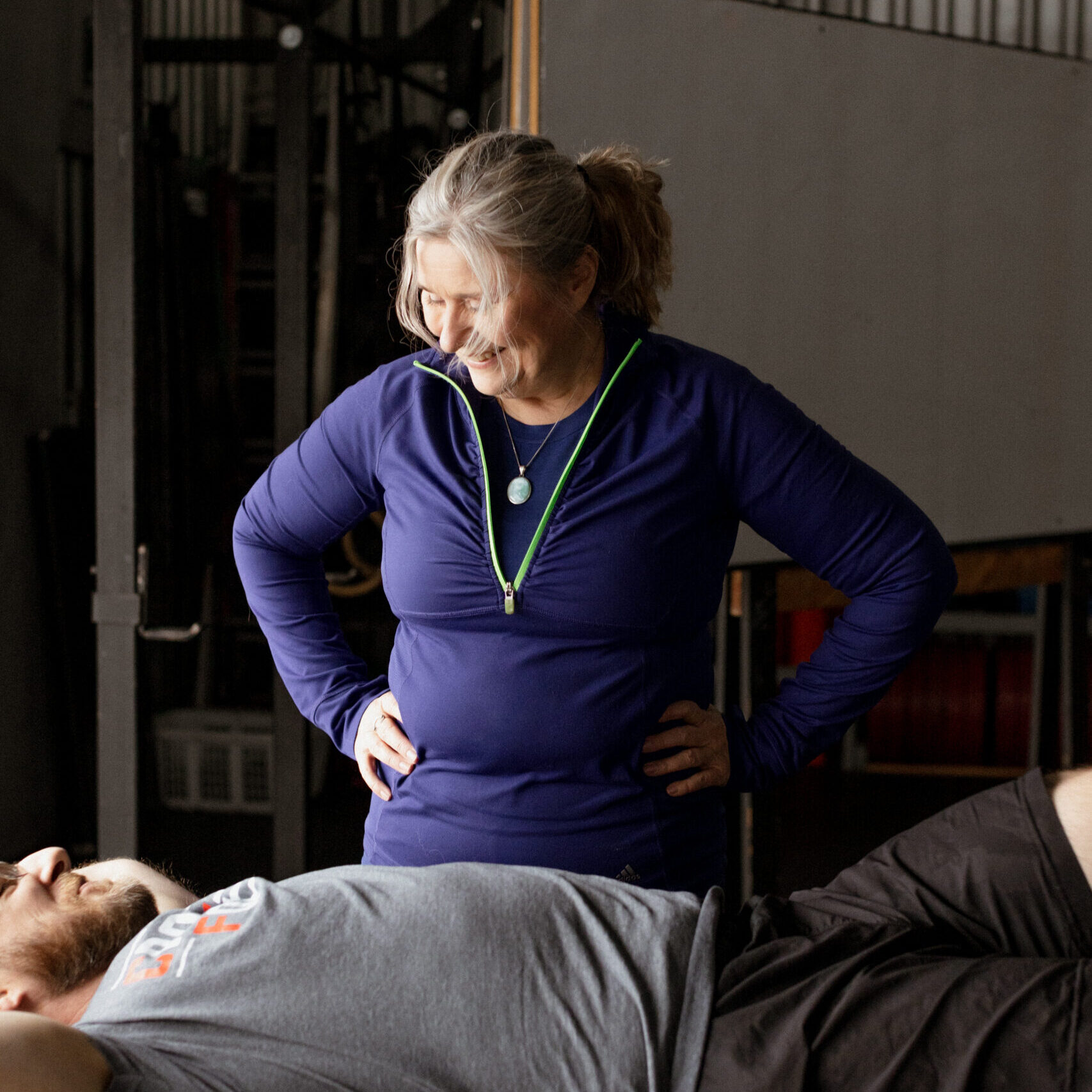
Using Fascia Stretch Therapy™ and its principles: breath-led techniques, traction, oscillation, and intentional pacing, I work with the body rather than imposing my will on it. Force is not our friend when the nervous system is involved.
Sessions are guided by what your nervous system can tolerate and integrate, not by how aggressive we can be. Chances are, you’ve already tried pushing harder with limited success. It’s typically why you’ve ended up on my table.
This nervous system informed approach is why many clients feel meaningful change early on, even after months or years of stalled progress. Not because they didn’t try hard enough, but because their system needed a different entry point.
Why people call me their “last resort”
By the time the athlete lands here, they’ve often been told:
“That’s normal at your level.”
“You just need to stretch more.”
“Just roll it out.”
“Just push through.”
“There is no injury.”
“You’ll just have to manage it.”
And outside of sport, the message sounds different but carries the same undertone:
“That’s normal for your age.”
“Just rest it.”
“It’s probably stress.”
“Your scans look fine.”
“There’s nothing wrong.”
“You’ll just have to live with it.”
You’re not broken. Your body has simply adapted exceptionally well to perceived threat.
My role is to help unwind those adaptations so the body can move, recover, and perform without constantly scanning for danger.
It’s not flashy work. It’s precise, patient, and deeply respectful of the nervous system.
And yes, sometimes I am the last stop people make before they finally feel forward momentum again.
A gentle truth I’ll share with you
While I’m good with being a last resort, I’ll say this honestly:
Many people would benefit from coming sooner.
Not because I replace other professionals, but because this work integrates beautifully with training, rehab, performance care, and even sport psychology and mental health support.
When the nervous system is regulated and the fascia becomes supple and hydrated again, everything else tends to work better:
- Fear and guarding subside.
- Mobility becomes easier.
- Strength sticks.
- Recovery times improve.
- Confidence returns.
Whether you’re an athlete trying to stay in the game or someone who just wants to move through life without constant vigilance, earlier intervention often means a smoother road.
If you’ve read this and something resonates
If you’ve done “everything right” and still feel like something is missing, that’s worth paying attention to.
You don’t have to wait until you’re out of options.
But if you do, I’ll still be here.
In my work, being a last resort isn’t a weakness. It’s a real reflection of how layered recovery is.
And sometimes, the body just needs the right conversation to finally let go.